PEGAFFI · Education Guides · Design Your Ring
The Best Lab Grown Diamond Engagement Rings of 2026: A Jeweler's Honest Ranking
2026-10-02 · 8 min read
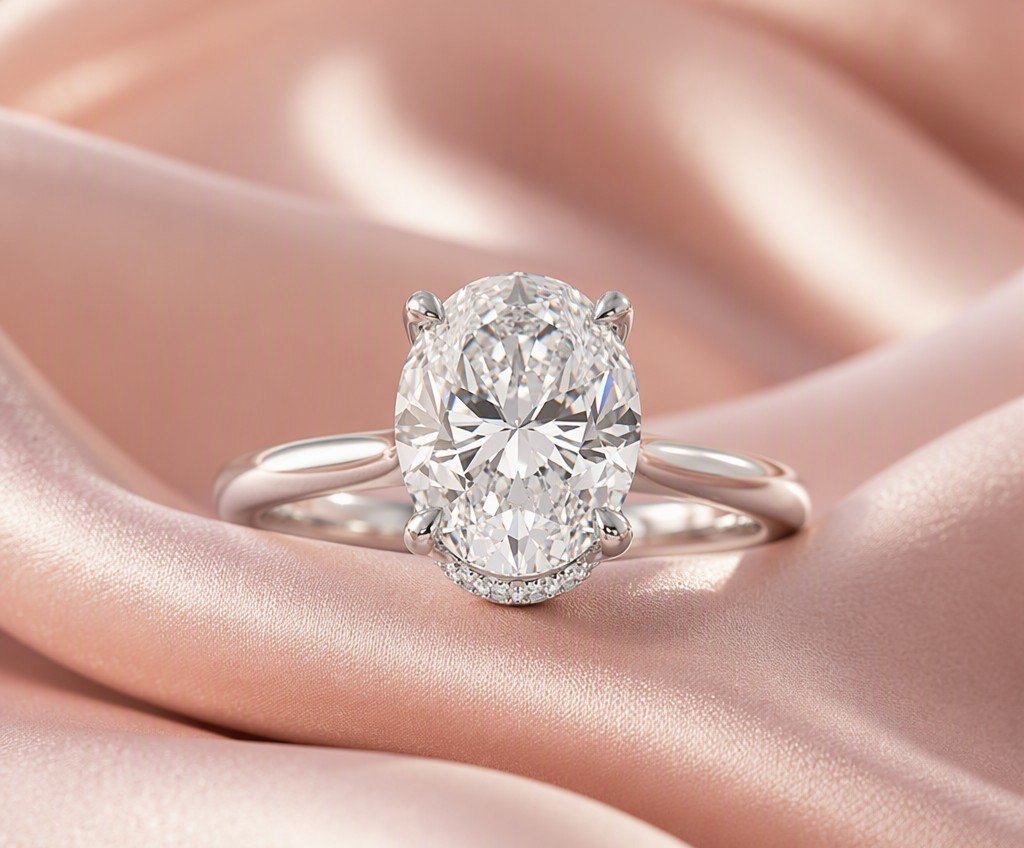
The short answer, before the long one: for most people in 2026, the best lab grown diamond engagement ring is an oval solitaire on a thin pavé band — it flatters the most hand shapes, looks larger per carat than any other cut, and a well-made one should cost $1,400–$2,000 for 1.5 carats, IGI-certified, in solid gold. Everything below is the reasoning, plus the five settings that beat it for specific buyers.
One disclosure, because rankings written by sellers deserve skepticism: we make every ring on this list in our own factory, so we are not neutral. What we can offer that a neutral reviewer can't is the bench-level view — which settings survive daily wear, which ones come back for repairs, and which ones our own jewelers chose for their partners.
The ranking at a glance
| Rank | Setting | Center stone | Fair price (from) | Best for |
|---|---|---|---|---|
| 1 | Oval solitaire, thin pavé band | 1.5ct oval, IGI D–F / VVS | $1,490 | Most people — timeless, elongating, largest look per carat |
| 2 | East-west oval | 1.5ct oval set horizontally | $1,490 | Modern tastes, active hands, lower profile |
| 3 | Hidden halo oval | 2ct oval + concealed pavé collar | $1,890 | Maximum sparkle without a visible halo |
| 4 | Six-prong round solitaire | 1.5ct round brilliant | $1,390 | Traditionalists; the most fire of any cut |
| 5 | Three-stone oval & pear | 2ct oval + matched pears | $2,490 | Meaning-driven buyers; serious finger coverage |
| 6 | Cushion halo round | 1.5ct round + pavé halo | $1,790 | Maximum visual size on a budget |
1. Oval solitaire on a thin pavé band — the default right answer
The oval brilliant has been the most requested engagement shape for three consecutive years, and the reason is physics: an oval's elongated outline spreads carat weight across more surface area, so a 1.5ct oval faces up visibly larger than a 1.5ct round. On a whisper-thin pavé band, the eye goes straight to the stone. It is the setting our own jewelers pick most often for their own families — which, given that they could choose anything, is the strongest endorsement we can offer.
2. East-west oval — the modern one
Same stone, rotated ninety degrees so it lies across the finger. The east-west setting reads contemporary without being trendy in a way that will date, and its low, horizontal profile snags less on gloves, pockets and hair — the practical choice for surgeons, teachers and gym-goers. If the classic oval is the safe answer, this is the safe answer with a point of view.
3. Hidden halo — sparkle for the wearer, not the audience
From above it looks like a clean solitaire. From the side — the angle the wearer actually sees all day — a concealed collar of pavé diamonds throws light up into the center stone. It is the most engineering per dollar of any setting on this list, and the one that gets the most "wait, look at it from the side" moments. Budget roughly $400 more than the equivalent solitaire.
4. Six-prong round solitaire — the classic, done honestly
The round brilliant is optically the best cut — maximum fire, maximum brilliance — and the six-prong setting is its safest home. It ranks fourth only because round cuts face up smaller per carat than ovals, so the same budget buys less visual size. If tradition and pure light performance matter more than spread, move it to first place and ignore our ranking.
5. Three-stone oval & pear — the meaningful one
Past, present, future — the three-stone ring carries the most symbolism per setting, and an oval flanked by matched pear side stones gives the widest, most continuous line of light across the finger. It is the most complex to make well (the side stones must be matched for color and proportion by hand), which is why it costs more — and why cheap versions look wrong.
6. Cushion halo — the size maximizer
A pavé halo around a round center stone roughly doubles the visual spread, making a 1.5ct stone present like 2.5ct. It ranks last not because it is lesser but because the halo look is a deliberate aesthetic choice — more presence, less restraint. For buyers who want the largest-looking ring the budget allows, it is the correct answer.
What any of these should cost in 2026
The lab grown diamond market has matured to the point where pricing is transparent: a well-made version of any setting above, with an IGI-certified D–F / VVS center stone in solid 14K or 18K gold, runs $1,400–$2,500 factory-direct. Big-name retailers sell the same category of ring — same certification, same gold — for $4,000–$8,000. The difference is not quality; it is showrooms, advertising and brand margin. Check any ranking against that math before trusting it, this one included.
See the rings behind this ranking at pegaffi.com/collections/engagement-rings — every piece IGI-certified, made in our own factory, from $1,390. Want one of these with a personal change? Any setting can be customized at no design fee: pegaffi.com/custom.