PEGAFFI · Education Guides · Design Your Ring
9K, 14K or 18K? How to Choose the Right Gold for Your Ring
2026-09-21 · 7 min read
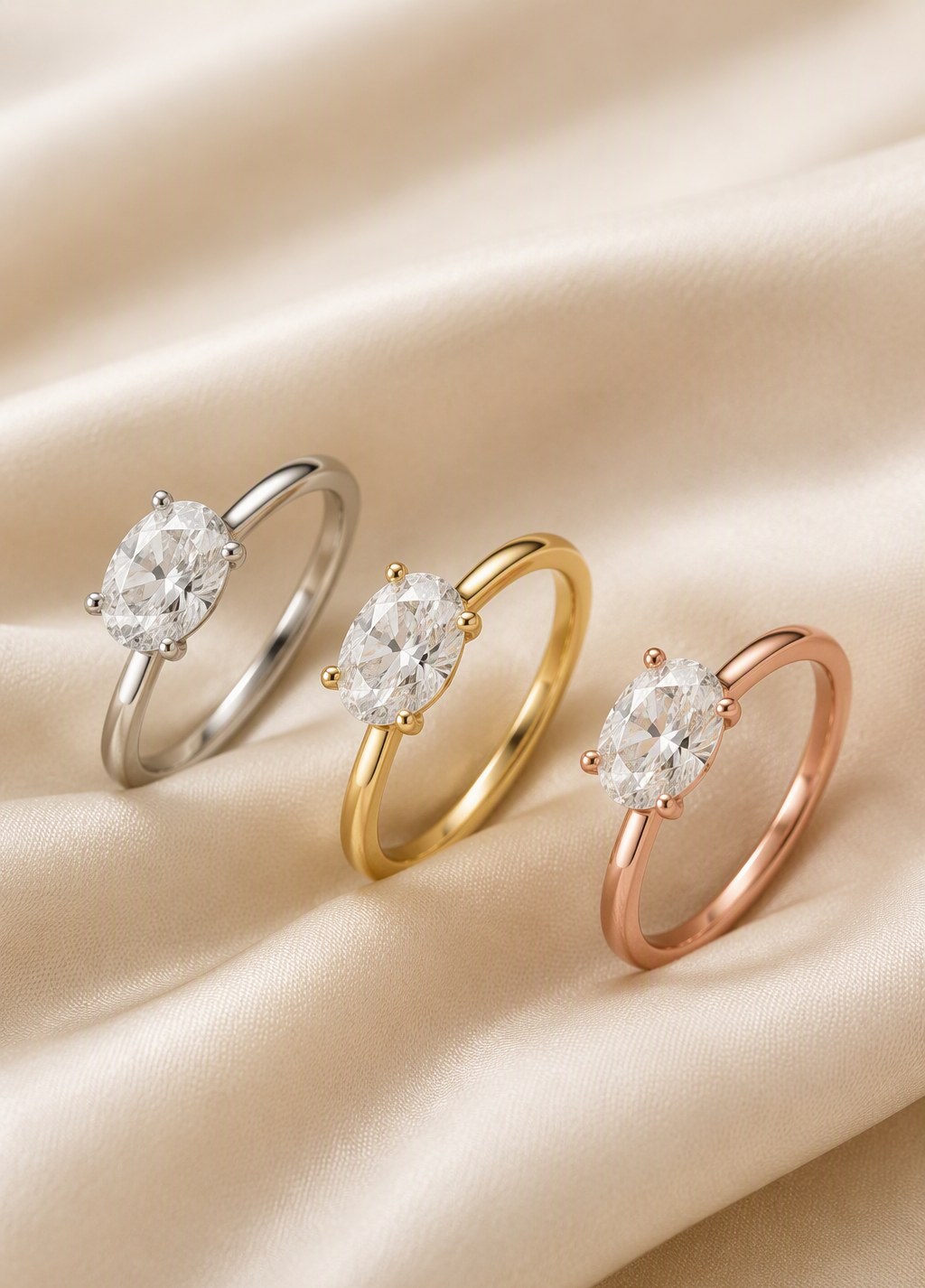
"Karats" measure purity, not quality — and higher is not automatically better for jewelry you wear every day. Pure gold (24K) is too soft for a ring meant to last a lifetime, so gold is alloyed with other metals for strength. The karat number tells you how much pure gold remains. PEGAFFI offers 9K, 10K, 14K and 18K in three colors, because the right answer depends on how you live, what you wear, and your budget.
What the karat numbers actually mean
| Karat | Pure Gold | Durability | Best for |
|---|---|---|---|
| 9K (37.5%) | 37.5% gold | Hardest of the four | Very active lifestyles, tight budgets |
| 10K (41.7%) | 41.7% gold | Very hard, US minimum for "gold" | Daily wear, value buyers |
| 14K (58.5%) | 58.5% gold | Hard, the sweet spot | Most engagement rings — our recommendation |
| 18K (75%) | 75% gold | Softer, richer color | Special pieces, sensitive-skin friendly |
The trade-off is simple: more gold means richer color and higher intrinsic value, but a softer metal that scratches more easily. Less gold means a harder, more scratch-resistant ring at a lower price, with a slightly paler hue. For a ring worn every day, 14K is where durability and beauty balance — it is the standard of the American bridal market for a reason.
White, yellow or rose gold?
- White gold — alloyed with palladium or nickel and usually rhodium-plated for a bright, platinum-like finish. Modern, versatile, makes colorless diamonds look icier. Note: rhodium plating may need refreshing every few years.
- Yellow gold — the classic, alloyed with copper and silver. Warm, traditional, and the most flattering on warm and olive skin tones. Never needs plating.
- Rose gold — gold alloyed with extra copper for a romantic blush tone. The most durable of the three (copper is hard), flattering on nearly every skin tone, and it hides wear beautifully.
Match metal to skin tone
A quick rule of thumb: look at the veins on your wrist in natural light. Greenish veins suggest warm undertones — yellow and rose gold will glow on you. Bluish veins suggest cool undertones — white gold and platinum sing. Can't tell? You likely have neutral undertones and every color works. When in doubt, rose gold is the great flatterer.
Gold vs. platinum — the honest comparison
| Gold (14K/18K) | Platinum (950) | |
|---|---|---|
| Color | Three color choices | Naturally white, forever |
| Weight | Comfortable | Noticeably heavier — some love this |
| Wear | Scratches show; polish restores | Develops a patina; scratches displace, don't lose metal |
| Allergies | White gold with nickel can irritate | Hypoallergenic |
| Price | $ | $$ — roughly 1.5–2× 18K gold |
A note on metal allergies
True gold allergy is rare; most reactions are to nickel in white-gold alloys. If you've ever had a reaction to costume jewelry or belt buckles, choose 18K yellow or rose gold (higher purity, nickel-free alloys) or platinum. Tell us when you order and we'll confirm the exact alloy for your piece.
On every PEGAFFI product page you can switch between white, yellow and rose gold and see the actual ring photography change instantly — what you see is the piece we cast.